“Three times I pleaded with the LORD about this that it should leave me. But he said to me, “My grace is sufficient for you. My power is made perfect in weakness” (2 Corinthians 12:8-9)

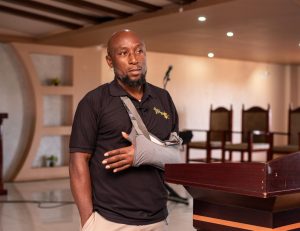
I have not always been disabled. Until six years ago, I had been a muscular, athletic guy. In fact, one of my main resolutions for 2020 was to take piano lessons. Then life happened! On 28th January 2020, a near-fatal accident changed everything. I survived with a serious injury in my left brachial plexus (please Google that). To this day, my left hand is yet to regain both motor and sensory function. Since then, I have needed help to carry out basic chores that require two hands.
This happened at a time when I was studying for my MA in Missions at the University of Winchester (UK). Over the subsequent months, the university classified me as “partially disabled” as we all waited for possible healing of my left hand. While I didn’t object officially, I initially resisted using assistive technology, choosing instead to adapt and train my functional right hand. I worked hard to deliver a 25,000-word dissertation, which was accepted, and my Masters degree was awarded. On my graduation day, 14th November 2023, being directed to a reserved seat in the disabled section at Winchester Cathedral confirmed that my new reality had dawned – DISABLED! I continue to type documents like this article (sometimes dictate, though I find it lazy!), drive … and do many things with one hand. Thank God I was born right-handed!
Compassionless Theology and Insensitive Prayer towards PWDs
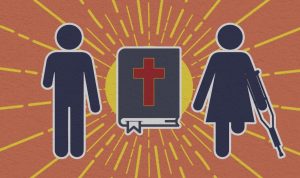
PWDs aren’t Miracle Props
I am a preacher, theology teacher, an Evangelist, a Christian Apologist – involved in a wide range Christian Ministry. Everywhere I go today, brethren express concern about my non-functional hand, some often questioning my “delayed healing.” Many offer sympathetic prayers, with some even declaring specific timelines for my restoration. One young man even dared to declare that the next time I return my hand shall be whole! Internally, I know that anyone that assesses me through my non-functioning left hand doesn’t really know me. I am one of the most functional and productive one-handed humans you’ll know. Sometimes possibly outdoing many two-handed fellas out there. Yet often seen as – disabled! These encounters raise a vital question: are people with disabilities (PWDs) viewed as fully human in the same way as the abled?
Many PWDs find themselves treated as “miracle props” by those who believe God’s power is only manifested through physical healing. They point to the ministry of Jesus and the Apostles, but does it follow that every impaired person must be made physically whole? What if they aren’t? When healings do not occur, the individual is often blamed for a lack of faith, leading to a major faith crisis. If you think this doesn’t apply to you, remember that we all carry unique “impairments,” visible and invisible, whether acquired or from birth. On the other hand they (PWDs) are continually treated as victims needing constant sympathy and charity – often very insensitive.
If you are not disabled, maybe it’s not you that this speaks about. Oh, I dare you to make that mistake of thinking that it’s not speaking to you. Just as it has been said about mental health, we all seem to carry around our unique “impairments”. Some negligible, mild, others moderate, or even possibly severe. Some get used and adapt, and we sometimes can’t tell unless we are told. Yet it’s one thing being born with impairment, and another acquiring one along the journey of life. It’s hard to tell which one is harder to live with.
“PWDs find themselves treated as “miracle props” by those who believe that God’s power is only manifested through physical healing and restoration.”
Over-realised Eschatology – the “Now” and the “Not Yet.”
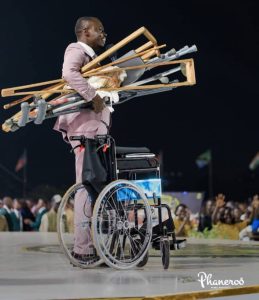
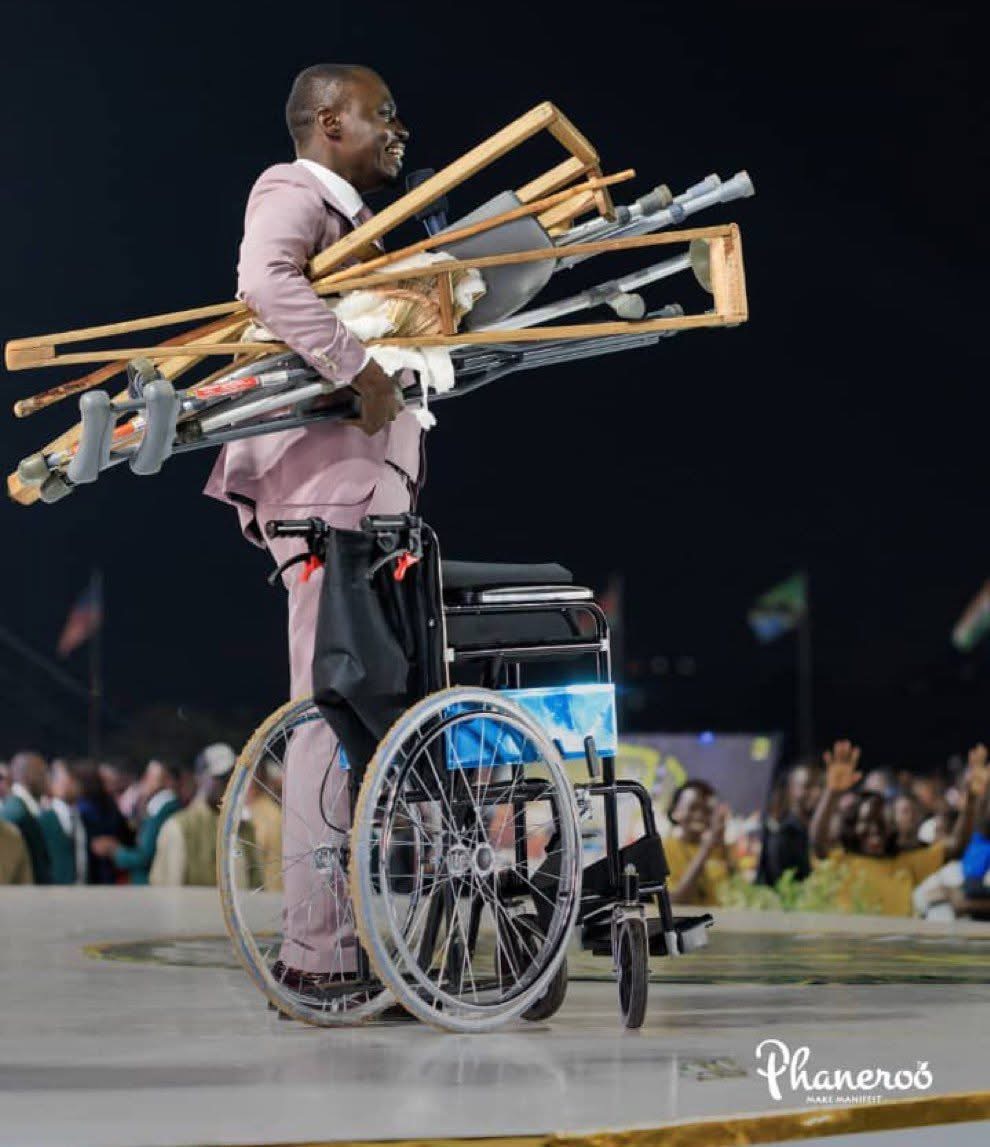
Ap. Grace Lubega presenting Crutches and wheelchair as evidence of recent miraculous healings at Phaneroo.
What comes to your mind at the sight of crutches and wheelchairs at the front of a church auditorium? Well, you can be sure it’s not that the church is finally offering assistive aide donations to PWDs, but rather, it often represents evidence of miraculous healings and an endorsement of the presiding leader’s power. They reassure the desperate that they are in the right place, unless their little faith or lack of it, is their undoing. Historically, certain human beings have been deemed more “valuable” than others. PWDs are often viewed as less capable and therefore less valuable in families, society, and sadly in church too. In a competitive world, superior physical abilities are preferred, leading some to even artificially enhance their bodies to meet these standards.
In an age of over-realized eschatology, churches position themselves as miracle centers, and church leaders as miracle performers. This requires “miracle props”—the sick and disabled. Healings, breakthroughs, and restorations are declared and decreed, and expected to happen there and then – here and now. But do they? Paradoxically, some miracle performers tend to prefer the abled as props, as the truly disabled seem to “complicate things.” Reports of hired “props” being unpaid highlight the performative nature of some of these spaces. And prophets and apostles that operate near hospitals but hardly visit them to showcase their powers, are quite telling too.
A Faith – Life Crisis amidst Accepted and Fashionable Impairments
The faith-life crisis of a PWD centers on whether they can be a complete member of the Body of Christ if they remain unhealed. Personal prayer becomes a struggle between pestering God for a cure and living with a resigned contentment that others might label as a lack of faith. Can God heal? Does God heal today? Will God heal me some day, soon? What if he doesn’t? Will I ever be seen and treated as a complete human being, be part of the body of Christ, participate in life, ministry, if I remain unhealed? Am I just a miracle prop in waiting?
In Exodus 4:10-17, God did not let Moses’ speech impairment excuse him from leadership. The God who made the mute and the blind can use all according to His purposes. Even with one functional hand, God has granted me abilities that challenge the distinction between spiritual arrogance and confident faith. No one is “accidentally” born with a disability; we are all made by our Maker. In John 9, in responding to the question on why the mad had been born blind, Jesus particularly clarifies that disability is not a result of sin, but an incredible platform for the works and glory of God to be displayed.
“Will God heal me some day, soon? What if he doesn’t? Will I ever be seen and treated as a complete human being, be part of the body of Christ, and participate in life, ministry, if I remain unhealed?”
What is the exact difference between a lame person and the optically impaired one? One moves around in a wheelchair while the other needs spects (glasses) to move around. Both are impaired and need the respective aides in order to do life. Why is it then that the one wearing spects may consider themselves whole and complete, while looking at the one in the wheelchair as to be in more need of healing than they? Have we accommodated some impairments as acceptable and others not? Could it actually be that some impairments like short-sightedness are more fashionable than lameness? Many use assistive technology—glasses, hearing aids, or artificial limbs—and live thriving lives content in God’s love. Paul’s “thorn in the flesh” reminds us of God’s response: “My grace is sufficient for you.” There are so many ways beyond physical healing that God’s power is made manifest in the lives of PWDs, and I am a lived experience of that sufficient Grace.
The Church and PWDs – on Policy and Spiritual Prejudice.
While secular institutions now have legal requirements for PWD inclusion, many churches still percieve PWDs as “incomplete” members. Without a clear identity and dignity, their belonging is not guaranteed. We often use them as props for advertisements, yet fail to include them in the community. In Uganda, we are all just one medical situation away from needing a miracle. Our healthcare system is often dysfunctional, making health a matter of survival for the vulnerable. We must stop seeing PWDs as victims and start seeing them as brothers and sisters.
The “Golden Policy on Humans” for all Christians is firmly stated in the scriptures that all humans are made in God’s image. The command to love our neighbor applies regardless of ability. Yet, the church space—from infrastructure to attitude—is often the hardest place for an African PWD to be.
“There is neither Jew nor Gentile, neither slave nor free, nor is there male and female, … (and neither abled nor disabled) … for you are all one in Christ Jesus.” Galatians 3:28
How many PWDs are on your leadership team? Can they participate in the Great Commission? In my experience, once people notice my hand, they doubt my anointing. They would rather offer an insensitive prayer than listen to a “preacher with an impairment.” Does my dysfunctional left hand limit me from preaching or teaching a biblically sound sermon? Can I even dare pray for others, let alone “perform miracles”?
 What then? On behalf of PWDs, I beseech church leaders to move beyond sympathy to intentional inclusion. Remove us from your crusade posters and banners and bring us into your hearts and your wonderful church activities. We long to be part of real church life. Invest in accessible infrastructure and programs that include us. Befriend PWDs, welcome us into your homes, and encourage our full participation in all church activities. Take initiative to educate self and your teams about disabilities, and ministry to and with the PWDs. We are an untapped missiological game-changer. Instead of sympathy and attempts at miraculous declarations of healing and restoration, why not just love these brothers and sisters. At a personal level, love them so much, that they don’t be viewed as a burden or distraction that we must get rid of from our gatherings. Love them so much, that you have interest in knowing them before laying hands on them in disconnected insensitive prayer.
As the Lausanne Movement has accurately put it, in view of the Great Commission, (https://lausanne.org/video/disability-and-the-great-commission-disability-concerns-network-panel-discussion) the Church is called to prioritize inclusion as a form of discipleship where people with disabilities are first of all loved and proud to belong, and serve as co-laborers, requiring an intentional shift from mere charity to genuine community. By embracing compassionate theology for invisible disabilities and valuing how God reveals strength even through limitation, congregations can transform their culture through relational support and simple acts of friendship. Ultimately, the Church should lead society as an inclusive model of interdependence, where every member’s unique witness contributes to the beauty of the body of Christ – irrespective of ability or disability.
“Ultimately, the Church should lead society as an inclusive model of interdependence, where every member’s unique witness contributes to the beauty of the body of Christ – irrespective of ability or disability.”
So, next time you see a disabled person, rethink what it means to be human. Check whether there is space for them in your local church. Reconsider your eschatology: in this fallen and broken (disabled) world, not everyone is made well and whole “here and now.” But in the “not yet” – in the new heavens and new earth, there will be neither abled nor disabled. Until then, love them, and yes pray for them, not as miracle props or victims needing sympathy and charity, but as fellow members of the body of Christ and neighbours to love in this world of God where we are called to be compassionate witnesses. Because, we not created to be miracle props!
~ Raymond L. Bukenya ~
Writer, Speaker & Team Leader Tru Tangazo Uganda
Related Articles