“… in classic Bourbonian style, Ugandan church leaders praise the emperor as though he reigns over a kingdom equally eternal or even better than Christ’s. They have learned nothing and forgotten nothing from both Luwum and Amin. That’s why a dead Luwum is more alive today than they are while commemorating him!”

Can the Dead outlive the Living?
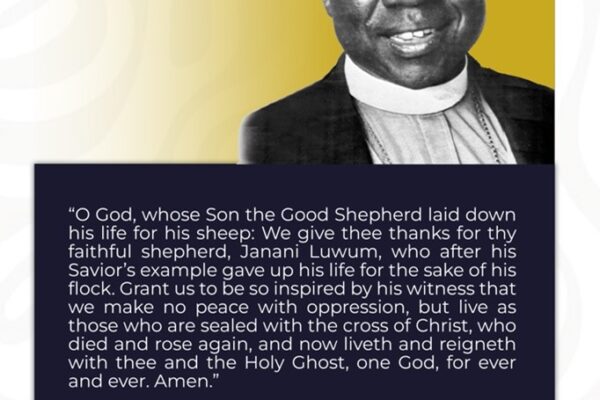
“The dead are not dead,” goes the African adage. They continue to haunt the living. Because some legacies of the dead never rot. Well, if the dead aren’t dead, then who is dead? And are the living safe at all? This week, we commemorated 49 years of Archbishop Janani Luwum’s Martyrdom, and consequent legacy. A man, dead and long gone. But why does he continue to outlive generations of Christians and leaders?
Seeing today’s church leaders masquerade around in air-conditioned SUVs and state-provided security, one wonders if Janani Luwum didn’t set the bar a bit too high! A martyr in the league of archbishops of Canterbury, Thomas Cranmer and William Laud martyred in office in 1556 AD and 1645 AD, and 20th century martyrs such as African-American Civil rights leader Dr Martin Luther King Jr, and Manche Masemola (South Africa), Archbishop Luwum showed courageous leadership in opposing tyranny, gross human rights violations in Uganda during Amin’s time.
Undoubtedly, it was his searing martyrdom that galvanised international and national opposition to the Amin regime, marking a pivotal turning point leading to the subsequent fall of Idi Amin and liberation of Uganda. It was then believed, both locally and globally, that he had given the church a new spirit and vitality. He encouraged Christians and leaders especially, not to disregard, but to confront issues of church and state in Uganda. And he modelled it publicly and personally. Today, the praise of the emperor is a public matter, while rebuke is a private one, as the liberation of downtrodden Ugandans remains utopian.
Yes, it’s been fifty years since that brave and courageous son of Mucwini (Kitgum), Northern Uganda, was brutally murdered for thinking it was his calling as a church leader to tell truth to power. To rebuke a blood-spilling tyrant for irrigating and defiling our fertile soils with the blood of our own brothers and sisters. We remember him because he chose to face death over a fake, temporal and largely hypocritical life, because he was already dead to the world that many of our contemporary church leaders desperately long to conquer, with temporal gains to protect – in vain.
“He has told you, O man, what is good; and what does them Lord require of you but to do justice, and to love kindness, and to walk humbly with your God”
Micah 6:8
While it is the privilege of the great (leaders) to watch catastrophe from a terrace, Luwum refused to be a hired hand who runs to safety and comfort, only to watch catastrophe from the terrace. He considered the vulnerable and voiceless Ugandans, as a flock entrusted to him by his heavenly Master and Lord. He was not only going to feed and tend, but like the shepherd boy David, and our Lord at the Cross, he laid his life in harm’s way, if that’s what it took for the sheep to see what kind of monster Idi Amin was. He constantly told his brother bishops: ‘We must see the hand of God in this’. Archbishop Luwum never sought martyrdom. So, no one is inciting church leaders to seek martyrdom. But running away from it isn’t their calling either! In fact, a church that is afraid of martyrdom is indeed dead, and has no business identifying with the Cross of our Lord, nor the blood of thousands of martyrs throughout Christendom.
From where we stand today, Janani Luwum single-handedly puts entire generations of Ugandan church leaders to shame. He was also burdened by the threatening cracks of disunity and segregation in the body of Christ – exhibited in both ethnic and classist texture. He dreamt of a united, non-segregated church in which leaders at all levels—ordained and lay—were treated and remunerated fairly, believers of all ethnicities lived in true union in Christ, and his efforts toward realizing this vision were clearly evident. Almost fifty years on, the divide between rural and urban church leaders and members has become a deep chasm, though at the time it was little more than a crack.
A leader who fears dying in order to bend to material ambitions is a decorated coward. The fear of death has killed many Ugandan Church leaders. Their robes are the only thing longer than their lust for lust for recognition. The comfort of state-provided luxury and protection, which, if withdrawn, risks turning these “great men” and women into ordinary Ugandans like you and me. Of what good are the living who behave as though dead? Numb to reality, slumbering in eternal comfort, unbothered by the plight of the living around them. Whose only reason to remain alive is to occupy positions of leadership, protect whatever gains they’ve made, and lobby for more projects from the state.
Today, we the living commemorate and remember dead and long-gone men of conviction like Janani Luwum because while they lived, the grave didn’t scare them. Unlike them, we are simply an embarrassment to history and Christendom. If indeed we profess faith in the same Christ as Luwum, and are alive in Him, assured of resurrection, we shouldn’t be desperate to protect our gains in a temporal world. In any case, who, except the wicked, is going to kill us for telling truth to power and demanding accountability and justice for the voiceless? If they are good leaders as we have publicly praised them, then why are we afraid of them?
“Janani Luwum did not seek Martyrdom. No one is inciting church leaders to seek martyrdom. But running away from it isn’t their calling either! In fact, a church that is afraid of martyrdom is indeed dead, and has no business identifying with the Cross of our Lord, nor the blood of thousands of martyrs throughout Christendom.”
Professor Mahmood Mamdani, commenting on the corrosion of morals in our country, suggested in his book “Slow Poison”, “It will take no less than a generation for our country to come out of it (state of corruption, shamelessness, the mess) to nurture a political culture that can provide an effective antidote.” Meaning that the only hope for Ugandan morality is if the current generation passes (dies) and leaves no residue. But will the death, aging, and retirement of our current leaders bring us any hope of a more effective pastoral and prophetic church? The Baganda say, “Ensi egula milambo.” = “A nation is redeemed (bought) by dead bodies.” Which is completed with, “Especially without yours!”
Dead Men don’t have Convictions.
What is our conviction when we pray, “Your kingdom come, your will be done, on earth as it is in heaven” (Matthew 6:10)? Are we hoping to sit back passively and wait for the Kingdom to come? Or are we called to be active participants in God’s Kingdom establishment on this side of eternity? When the living live without conviction, including today’s church leaders, there’s no evidence that they are alive. If they are, they are asleep, which is a biblical synonym for death.
The church ought to be the ‘conscience of the society’ through her members and leaders in public life who speak for the vulnerable and voiceless. As the years went by, his convictions grew even stronger for Janani Luwum, and the burden for his people and nation could no longer be held just in his heart, and his prayer closet. He refused to tremble before the political powers of his day. He believed it was his pastoral and prophetic role to extend beyond the pulpit and speak for the oppressed and downtrodden, he saw his podium as a platform to confront chest-thumping oppressors, just like Nathan rebuked the great king David.
“But you see, these are governing authorities put in place by God.” True, but Romans 13 considered, a Biblically accurate exposition on the whole text ought not to stop at firmly exhorting citizens to be subject to governing authorities, but squarely rebuke the leaders for not doing as God has positioned them to. Instead of punishing wrongdoing, they have perpetuated and rewarded it. They oppress and persecute the innocent, calling evil good and good, evil. Paul’s message demands attention and obedience from both the citizens and the governing authorities.
“For what does it profit a man to gain the whole world and forfeit his soul?”
Mark 8:36
For both have one Lord and master who is in heaven. By the way, it is for their own good (governing authorities) when church leaders remind them of where their authority comes from, and that they will be held accountable for not using it justly. When church leaders don’t do that, they’ve failed the nation and are as good as dead.
Luwum is more Alive than the Living.
If following Christ means death to self, we are dead to the world. Janani Luwum didn’t fear death. Why, then, do today’s church leaders fear death? Perhaps it is because they are not yet truly dead in Christ, and therefore remain uncertain about life in Him beyond this temporal existence. That uncertainty is understandable—but it is also frightening, and it exposes a serious underlying problem. Do they truly believe that the resurrection of Christ conquered the sting of death?
The fear of death is a critical weapon in the hands of any tyrant. They use it to enslave and silence their victims. But is death our leaders’ main fear? Or it is more about the pomp, the projects, and titles they will miss when gone? Maybe Janani Luwum set the bar a little too high. Of course, not anywhere closer to what our Lord. But he did his part in following what our Lord modelled, and called us to – live for the full gospel. Knowing well that it will oftentimes come with many tribulations, yet he encourages us to be of good cheer because He overcame the world.
At the risk of being misunderstood as directly attacking the Church of Uganda and its leadership, I pray that God gives them another perspective on this matter. This is a general concern about the church in Uganda as a whole. Leaders come and go, but the members and the institutions have been here and will be here tomorrow. So, rather than pronounce impotent curses on a messenger, I would advise that my brothers and sisters take time to reflect and pray. In fact, it’s a timely call to seriously pray about the looming leadership transition within the CoU, since its current Archbishop is approaching retirement.
Arise dear brethren, and pray for your house of bishops, that God will awaken them and from amongst them raise a godly shepherd after his own heart. Otherwise, the state, as it has conveniently done over the past decades, will gladly do you the honours and impose on you one of its loyal cadres to become your next Primate. Which will be a continuation of dead leadership, and more years of saltlessness and perforated vitality. You will only be as good as your ongoing building projects, giant cathedrals, monuments – nothing more! Where is the salt that a wounded and bleeding nation desperately yarns for?
“You are the salt of the earth, but if salt has lost its taste, how shall its saltiness be restored? It is no longer good for anything except to be thrown out and trampled under people’s feet.”
Matthew 5:13
Well, as long as every commemoration is about the church applauding its dead hero, and the state maligning its dead enemy (a dictator), tyranny will continue unchecked in this country. The regime would be more than pleased to bankroll the formalities and the accompanying feasts, to pledge further funding for church projects and monuments. Meanwhile, the suffering of the oppressed deepens—quietly legitimized by those who ought to be publicly contending for justice on their behalf. Janani Luwum’s spirit would be repulsed by such moral compromise and hollow piety.
What our nation needs today isn’t leaders who speak appeasing words in remembrance of Janani Luwum, but those who emulate and embody his courage and boldness. The Apostle Paul exhorted the Corinthian church to emulate him as he emulated Christ (1 Cor. 11:1). It is a disgusting mockery when the church in Uganda gathers to commemorate Janani Luwum, and nothing changes about the status quo. In times like these, a day like this would be commemorated in black cassocks. To talk about how Idi Amin brutally murdered Luwum without demanding accountability from the state for the dead, missing persons, extra-judicial arrests and killings, is mere comedy.
We believe in the Resurrection and the Life Everlasting.
As people of the Creeds, we ought to remember and holdfast our confession in agreement with the Apostle Paul, “For to live is Christ, and to die is gain” (Philippian 1:21). Death has given us more heroes than comfort and convenience. The dead are living in rest, with no more troubles to navigate, while the living are restless – troubled everywhere. One of the greatest messages we all shouldn’t miss from Luwum’s story, especially in his death, is the confidence of his faith: that the gospel of Jesus Christ offers a greater, more glorious, and above all, an eternal alternative to the violent, unjust, and deceitful political powers. Which appear mighty and glamorous, promising heaven on earth, but are temporal and disappear in a moment like chaff blown away by wind, or grass withered by a scorching sun.
“One of the greatest messages we all shouldn’t miss from Luwum’s story, especially in his death, is the confidence of his faith: that the gospel of Jesus Christ offers a greater, more glorious, and above all, an eternal alternative to the violent, unjust, and deceitful political powers.”
For a long time now, it has not been clear as to whether church leadership in Uganda is dead or alive (especial of Church of Uganda which the Late Abp. Janani Luwum once led). They commemorate a dead man, but with hardly any evidence of being alive themselves. Are they? More educated, more exposed, more membership and resources, and with clouds of witnesses before them, yet Janani continues to outlive them. Why would a dead man continue to outlive the living? Why is that five decades later, no other church leader has been able to speak truth to power in the same way Luwum did? Could it be that he set the bar so high that all we have to show for his legacy is a public holiday, memorial sites, monuments, a skyscraper on Kampala road, schools, a theological college, and lots of good tributes? It cannot be that the main lesson taken from his death is fear of death, and emperor!
If it is because of the Emperor, maybe they need to be reminded of what the prophet Daniel prophesied to King Nebuchadnezzar as he reigned over the Babylonian Empire (Daniel 2) – one of history’s greatest. It collapsed in his day, and many others followed. However, in classic Bourbonian style, Ugandan church leaders praise the emperor as though he reigns over kingdom equally eternal or even better than Christ’s. They have learned nothing and forgotten nothing from both Luwum and Amin. That’s why a dead Luwum, is more alive today than they are while commemorating him! I hate to imagine how they, themselves shall be remembered. As they say, dead men make convenient heroes. But it looks like we won’t be seeing more heroes soon.
~ Raymond L. Bukenya ~
Writer, Speaker & Team Leader Tru Tangazo Uganda
Related Articles